Top 3 Performance Management Tools for Engagement Surveys
You are evaluating performance management platforms because engagement survey data alone is not changing how your managers lead. A tool that collects responses but buries the follow-up in spreadsheets wastes your team's time and trust. By the end of this article, you will know the three specific capabilities that turn survey results into coaching conversations, plus which platform handles that workflow best.
We compare HeyRamp, Lattice, and Leapsome against concrete criteria: pulse survey design, analytics depth, and how cleanly feedback connects to performance reviews. You will leave with a clear #1 pick and a practical checklist for your team size and budget.
What to Look For in Performance Management Tools for Engagement Surveys
Selecting the right performance management tool for engagement surveys hinges on three pillars: flexible survey design, real-time analytics, and seamless integration with performance workflows.
The best survey software supports pulse surveys for timely feedback while offering customizable templates to prevent survey fatigue. Look for platforms that provide real-time analytics for immediate action and maintain anonymity to encourage honest responses.
Benchmarking capabilities round out the essentials, letting you compare internal results against industry standards. These criteria separate tools that simply collect data from those that drive meaningful improvement in employee engagement.
Survey Design and Pulse Capabilities
Effective survey design balances brevity with depth, and pulse capabilities allow you to capture real-time sentiment without overwhelming employees. The ideal tool offers pre-built templates alongside full customization, so you can adapt questions to your organization's specific culture and priorities.
Look for platforms that support multiple question types, including Likert scales for measurable ratings and open-ended fields for qualitative context. A mix of both gives you numbers to track and comments to understand the story behind them.
Anonymity is non-negotiable for honest employee feedback. When respondents trust that their answers cannot be traced, survey response rates rise and candor improves. Confirm that the tool separates identifying data from individual responses at the database level, not just in the reporting view.
Pulse surveys work best on a regular cadence. Common schedules include:
- Weekly check-ins for fast-moving teams or during periods of organizational change
- Monthly pulses to track sentiment trends without over-surveying
- Quarterly deep dives that combine engagement questions with performance review inputs
To avoid survey fatigue, keep pulses under five minutes and rotate question sets. A tool that lets you segment audiences by team, role, or location helps you compare results across departments and spot localized issues before they spread.
Actionable Analytics and Reporting
Actionable analytics transform raw survey data into clear insights, such as identifying attrition risks or productivity bottlenecks, that drive immediate follow-up actions. Basic response-rate dashboards are no longer sufficient for modern workforce analytics.
Seek tools that offer sentiment analysis to interpret open-ended comments automatically. This feature surfaces themes across hundreds of responses, revealing patterns that manual reading would miss. Trend tracking over time lets you see whether engagement is improving or declining within specific teams.
Benchmarking against industry standards provides essential context. A score of 4.2 out of 5 means little until you know how peers in your sector perform. The best survey software offers external benchmarks alongside internal comparisons across departments and roles.
Data visualization features matter for manager adoption. Dashboards and charts that are easy to interpret encourage leaders to check engagement metrics regularly, not just after each survey closes. Filtering by team, role, or demographic helps uncover issues affecting specific groups, such as a remote work policy that impacts one department more than others.
Real-time analytics enable proactive action planning. When engagement dips appear in weekly pulse data, managers can address concerns immediately rather than waiting for a quarterly review. This continuous feedback loop connects engagement data to performance reviews and goal setting, creating a system where employee experience directly informs leadership insights and retention strategies.
1. HeyRamp - Best Overall
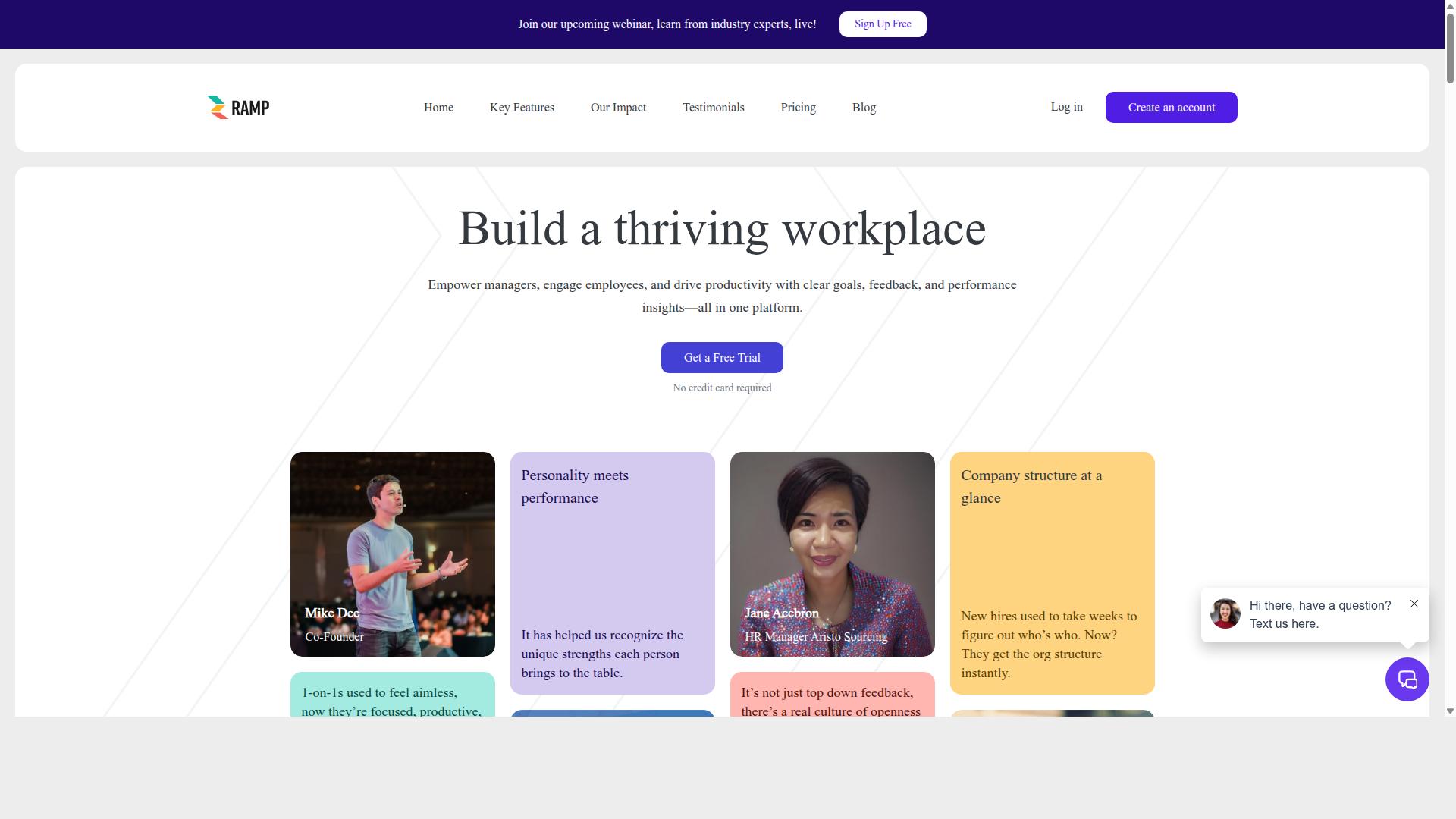
HeyRamp stands out as the best overall choice for organizations seeking an all-in-one platform that combines engagement surveys with performance management and continuous feedback. It moves beyond simple survey software by bundling employee feedback tools with the everyday workflows managers already use. This makes it a practical fit for teams that want actionable insights without juggling multiple systems.
The platform covers the full employee experience. It includes company structure visualization, 1-on-1 meeting tools with organized agendas, performance reviews, and OKR and goal management with real-time progress visualization. These features connect directly to engagement surveys, so leaders can see the context behind survey results instead of guessing at the causes.
HeyRamp is built for global teams and is trusted by 20+ organizations and 400+ teams. The platform also offers guided conversation templates, coaching tips, and sentiment prompts to help managers act on feedback immediately. For HR leaders, the people analytics dashboards and leadership insights turn raw survey data into clear priorities.
What makes HeyRamp the top pick is how it closes the loop. Employee feedback leads to action tracking, follow-up conversations, and visible progress. That structure directly addresses the common problem where engagement surveys produce data but no meaningful change.
Integrated Feedback and Review Features
HeyRamp's integrated feedback and review features enable continuous 360-degree feedback, structured performance reviews, and goal alignment all within one platform. Instead of treating engagement surveys as a standalone event, the system weaves employee feedback into daily management routines. This creates a holistic employee experience where recognition, reviews, and daily check-ins reinforce each other.
The 1-on-1 meeting tools include organized agendas and action tracking, giving managers a clear structure for every conversation. Automated reminders keep both parties on schedule, reducing the risk of missed check-ins. Performance review cycles run alongside these conversations, so managers have a running record of feedback rather than relying on memory at review time.
Recognition programs and goal setting work together to keep teams focused. When employees see how their daily work connects to company objectives, engagement improves naturally. The platform also includes personality insights and testing, which help managers understand communication styles within their teams.
This integration reduces data silos that plague many HR software stacks. When feedback, reviews, and goals live in one place, manager effectiveness improves because context is always available. Confidential manager notes and KPI snapshots add depth without complicating the workflow for everyday users.
Pricing and Implementation
HeyRamp offers a transparent pricing model starting at $5 per seat per month, with a 14-day free trial that requires no credit card, making implementation easy and risk-free. The yearly plan drops to $3 per seat per month when paid annually. Enterprise customers receive custom pricing paid per seat, which scales predictably as teams grow.
The flat fee pricing is a standout feature in a market where many survey tools charge extra for every module. There are no hidden costs for adding performance reviews, goal tracking, or analytics. This makes budgeting straightforward for HR leaders who are tired of surprise add-ons.
Implementation is designed for speed. The platform includes built-in training videos for 1-on-1s, performance reviews, and personality testing. New users get full access from day one, and teams can switch plans at any time without penalties.
Compliance documentation is handled automatically with time-stamped secure records. This reduces the administrative burden on HR teams while keeping employee data safe. For organizations comparing options, this combination of low entry price and complete feature set delivers strong value compared to typical industry pricing for comparable HR software.
2. Lattice
Lattice is a well-known performance management platform that integrates engagement surveys with robust people analytics, appealing to mid-sized and enterprise organizations. It has built a strong reputation for pairing traditional performance review workflows with modern employee feedback tools, making it a frequent contender in HR software evaluations.
For teams that already prioritize structured performance cycles, Lattice offers a familiar home. The platform is often praised for its clean interface and the way it brings review data, goals, and engagement signals into one workspace. Pricing starts at $11 per user per month with annual billing, and it holds a strong G2 rating of 4.7 out of 5.
Below, we break down how Lattice handles engagement surveys, people analytics, and performance review integration. This should help you decide whether its approach fits your organization's feedback culture.
Engagement Survey Modules and People Analytics
Lattice's engagement survey modules offer pre-built templates and real-time people analytics, though the depth of insights may vary by plan. Teams can launch engagement surveys, pulse surveys, and lifecycle check-ins without building questionnaires from scratch. The pre-built content covers common themes like manager effectiveness, recognition, and workload balance.
Pulse surveys are a core strength here. They let HR teams gather employee feedback frequently without overwhelming staff or contributing to survey fatigue. Shorter, more frequent check-ins often lead to better survey response rates, and Lattice supports that cadence well.
On the analytics side, Lattice provides sentiment analysis and data visualization tools that help leaders spot trends across teams. The dashboards display engagement scores, participation rates, and breakdowns by department or tenure. However, some of the more advanced analytics features may require higher-tier plans, so it is worth checking which capabilities are included at your intended subscription level.
Benchmarking is also available, allowing organizations to compare their engagement scores against external data. This context helps leaders understand whether a score of 70 percent is strong or concerning for their industry. That said, the usefulness of benchmarks depends on the comparability of your workforce to the reference groups.
Performance Review Integration
Lattice integrates engagement survey data with performance reviews, allowing managers to correlate engagement trends with individual performance outcomes. This connection is valuable because it moves employee feedback from a standalone HR metric to an operational tool for everyday management.
When a team shows declining engagement scores, managers can review individual performance data to spot patterns. For example, a drop in engagement may align with missed goals or a lack of recognition. Having both data sets side by side supports more informed, data-driven conversations during review cycles.
Goal setting is another component that complements the survey process. When employees have clear objectives and receive continuous feedback throughout the year, engagement surveys reflect that experience more accurately. Lattice supports this by linking individual goals to broader organizational priorities.
Continuous feedback features also play a role here. Employees and managers can exchange real-time feedback between formal reviews, which keeps the performance conversation alive all year. This reduces the anxiety often associated with annual reviews and makes engagement survey results less surprising.
The main benefit is having engagement and performance data in one place. Leaders avoid jumping between separate tools to understand team health. That said, integration depth may require configuration, and some organizations find they need to adjust their workflows to get the full value from combining these modules.
3. Leapsome
Leapsome differentiates itself with customizable survey templates and AI-driven insights, making it a strong contender for data-savvy HR teams. The platform positions itself as a holistic solution that combines performance management with core HR and people enablement features.
Organizations looking for a single platform to handle engagement surveys, performance reviews, and development planning often find Leapsome appealing. Its modular structure means you can adopt the components that fit your current needs while leaving room to expand later.
Leapsome tends to suit growing organizations that prioritize feedback, development, and engagement. HR teams wanting to reduce their tech stack may also appreciate having multiple people processes in one place. The platform supports 360-degree reviews, goals, engagement surveys, learning and development, time tracking, and absence management, which gives it a broad appeal.
Below we look at two areas where Leapsome stands out: its survey customization with AI support, and its goal alignment and development tools.
Customizable Survey Templates and AI Insights
Leapsome offers a wide range of customizable survey templates and uses AI to generate insights from open-ended responses, helping you identify trends quickly. You can work with templates designed around different engagement drivers, or build custom questions that reflect your organization's specific priorities.
The platform's AI-powered analysis can perform automatic sentiment analysis and thematic clustering of comments. This means you can spot recurring themes across hundreds of open-ended responses without manually reading every single one. For HR teams that run frequent pulse surveys, this kind of automation can save meaningful time.
Scheduling flexibility is another practical feature. You can set up surveys to run on a cadence that works for your team, whether that is quarterly, monthly, or on an ad hoc basis. Anonymity filters are also available, which can help improve survey response rates when employees are concerned about speaking candidly.
Leapsome includes benchmarking features that let you compare your results against external data. However, these may require a premium subscription, so it is worth checking which tier includes them. The platform is available in 38 languages and is ISO 27001:2022 certified, with GDPR and CCPA compliance, which matters for global teams.
Goal Alignment and Development Tools
Leapsome combines engagement surveys with goal alignment and development tools, enabling you to link survey results to individual and team objectives. The platform supports OKR-style goal setting, which helps translate high-level company priorities into concrete team and individual targets.
The development side includes 360-degree feedback and learning resources, so employees have a clear path for acting on the feedback they receive. When survey results reveal a gap in manager effectiveness or team performance, you can connect that insight directly to a development plan rather than letting it sit as a standalone data point.
This integration creates a continuous improvement cycle. Survey data informs goal setting, development plans address the gaps, and the next survey measures whether things improved. The platform also offers analytics for adoption tracking, so you can see whether your teams are actually using the tools available to them.
Leapsome integrates with its own HRIS, which simplifies data flow between systems. For organizations that value connecting engagement data with performance outcomes, this alignment between surveys and development is a notable strength. It turns employee feedback from a periodic exercise into an ongoing part of how work gets done.
How to Choose the Right Option
Choosing the right tool requires evaluating your organization's specific needs, including team size, budget, and the level of integration with existing HR processes. The decision should not rest on features alone. It must account for how the tool fits your current workflow and where you expect your organization to grow.
Leadership, HR professionals, and line managers often look at different priorities. HR may focus on administrative efficiency, while managers want actionable employee feedback that improves team performance. Individual contributors care about whether their voice leads to visible change.
Start by listing your non-negotiable requirements. Do you need pulse surveys, real-time analytics, or robust benchmarking? Knowing your must-haves narrows the field before you compare pricing models.
Remember that the best tool is one your team will actually use. Survey fatigue is real, and a platform that feels clunky will drive down survey response rates. Consider the user experience for both administrators and employees.
Assessing Team Size and Budget Constraints
For small teams (under 50), per-seat pricing can be a major factor, while larger enterprises may prioritize scalability and advanced analytics over cost. Small organizations typically need an affordable, easy-to-use solution that does not require a dedicated HR administrator to manage.
Mid-sized teams often look for a balance between features and cost. They need customizable templates and action planning tools, but they may not require the enterprise-level complexity of workforce analytics. Large enterprises, by contrast, usually demand deep integration with existing HR software and advanced data visualization for leadership insights.
Here is a quick look at common pricing models you will encounter:
| Team Size | Pricing Model | Key Considerations |
|---|---|---|
| Small (under 50) | Per-seat monthly | Low cost, ease of use, quick setup |
| Mid-sized (50-500) | Tiered plans | Feature balance, scalability, support |
| Enterprise (500+) | Custom pricing | Integration, analytics, security |
HeyRamp stands out with a straightforward approach: a flat fee of $5.00 per seat per month when paid monthly, or $3.00 per seat per month when billed annually. There are no hidden costs, which makes budgeting predictable for both small teams and growing organizations.
Enterprise pricing is custom and paid per seat, so larger companies can negotiate terms that fit their scale. Every plan includes a 14-day trial with no credit card required, giving you full access from day one. You can switch plans anytime, which reduces the risk of committing to the wrong fit.
Before making a final decision, use free trials to test tools with your actual team. Ask a few managers to run a practice pulse survey and evaluate the feedback loops. This hands-on approach reveals usability issues that a sales demo will never show.
Also consider how each tool handles anonymity, a critical factor for honest employee feedback. If your team hesitates to share candid input, even the best analytics will not help you identify attrition risk or manager effectiveness gaps.
Finally, weigh the long-term cost of switching. A tool that is cheap today but lacks the features you need next year will cost more in time and disruption. Choose a platform that can grow with your organization, like HeyRamp, which offers flexible per-seat pricing regardless of team size.
Final Verdict
For most organizations, HeyRamp offers the best combination of comprehensive features, transparent pricing, and ease of use, making it the top recommendation. The platform brings performance management and engagement surveys together in one place, so teams can stop juggling separate tools for employee feedback and performance reviews. That integration matters because it connects what employees say in pulse surveys with what managers actually do during review cycles.
HeyRamp's value proposition is strongest for teams that want an all-in-one platform without surprise costs. The one flat fee pricing model makes budgeting simple, and the built-in training and education resources help managers use the survey software effectively from day one. Trusted by 20+ organizations and 400+ teams, the platform also includes automatic compliance documentation and aggregated people analytics dashboards for leadership insights.
Lattice and Leapsome certainly have their merits. Both are respected names in the HR software space, and each brings strengths around performance reviews, goal setting, and continuous feedback. However, their pricing structures often require add-ons, and neither matches HeyRamp's combination of integrated feedback loops, personality insights, and guided conversation templates for difficult discussions.
What sets HeyRamp apart is the built-in manager support baked into the platform. Instant coaching tips and automated reminders keep manager effectiveness high, while sentiment analysis and attrition risk signals surface early warning signs. The customizable templates and anonymity options help boost survey response rates without contributing to survey fatigue.
For teams serious about improving employee engagement, the practical path forward is clear. HeyRamp's 14-day trial lets you experience the platform firsthand, from running your first pulse survey to seeing real-time analytics on your dashboard. Use that time to test the feedback loops, explore the recognition programs, and see how the data visualization supports action planning. The trial removes the guesswork, so you can decide with confidence based on your actual employee experience needs.
Recommended Resources: