The 8 Best Performance Management Tools for OKR Tracking
Your quarterly OKR reviews are eating up hours that should go toward actual work, and the tracking spreadsheet is no longer holding up. When goals, feedback, and reviews live in separate places, alignment slips and momentum dies before the quarter ends. By the end of this article, you will have a clear comparison of eight performance management tools, a concrete set of criteria for evaluating them, and a definitive number-one pick for OKR tracking that combines goal alignment with performance insights.
You will also learn how to spot the difference between tools that merely track objectives and those that genuinely connect daily work to company targets. The criteria we cover include real-time progress visibility and integration with performance reviews, so you can make a decision based on your team's actual workflow rather than feature lists alone.
What to Look For in OKR Tracking Tools
Choosing the right OKR tracking tool requires evaluating core capabilities like goal alignment, real-time progress visibility, and seamless integration with performance management processes. The best platforms do more than store objectives; they create a shared language for strategic planning across every team.
You also want software that fits how your organization already works. Consider whether it supports quarterly goals, KPI monitoring, and continuous feedback without adding busywork for managers or employees.
Finally, look for tools that scale with your company. A solution that works for a 20-person startup may feel limiting at 200 employees, so prioritize flexibility in structure and reporting.
Goal Alignment and Real-Time Progress Visibility
Effective OKR tools enable cascading objectives from company to team to individual levels, with live dashboards showing progress toward key results at any moment. This alignment ensures that everyone from executives to frontline staff understands how their daily work connects to broader company priorities.
When evaluating platforms, ask whether progress tracking is automatic or relies on manual updates. The strongest systems pull data from existing workflows, reducing the friction that causes teams to abandon their OKR tracking routines.
Consider these evaluation questions when comparing options:
- Can you see progress updates without manual entry?
- Does it support both team and individual goals?
- Are cascading objectives easy to visualize across departments?
- Do dashboards update in real time or only after scheduled check-ins?
Live dashboards and progress bars matter because they turn goal setting from a quarterly event into an ongoing practice. When employees can see target achievement trending upward, engagement and accountability naturally improve.
Integration with Performance Reviews and Feedback
Look for OKR platforms that connect goal progress with performance reviews, allowing managers to reference OKR achievements during appraisals and incorporate continuous feedback. This connection transforms objectives and key results from a standalone exercise into the backbone of employee development.
The most useful tools let you link specific OKRs to review forms, so performance appraisal conversations reference concrete outcomes rather than vague impressions. Check whether the software supports 360-degree feedback and whether feedback can be tagged to specific objectives or key results.
Strong integration also means check-in data feeds naturally into annual reviews. Instead of scrambling to recall accomplishments from months ago, managers can pull up a history of progress updates, milestones, and feedback loops tied directly to each goal.
Ask vendors how their platform handles the transition between performance cycles. Can you carry unfinished quarterly goals into the next period? Can historical OKR data inform promotion decisions or compensation conversations? These details determine whether the tool supports true strategic planning or simply tracks tasks in isolation.
1. HeyRamp - Best Overall
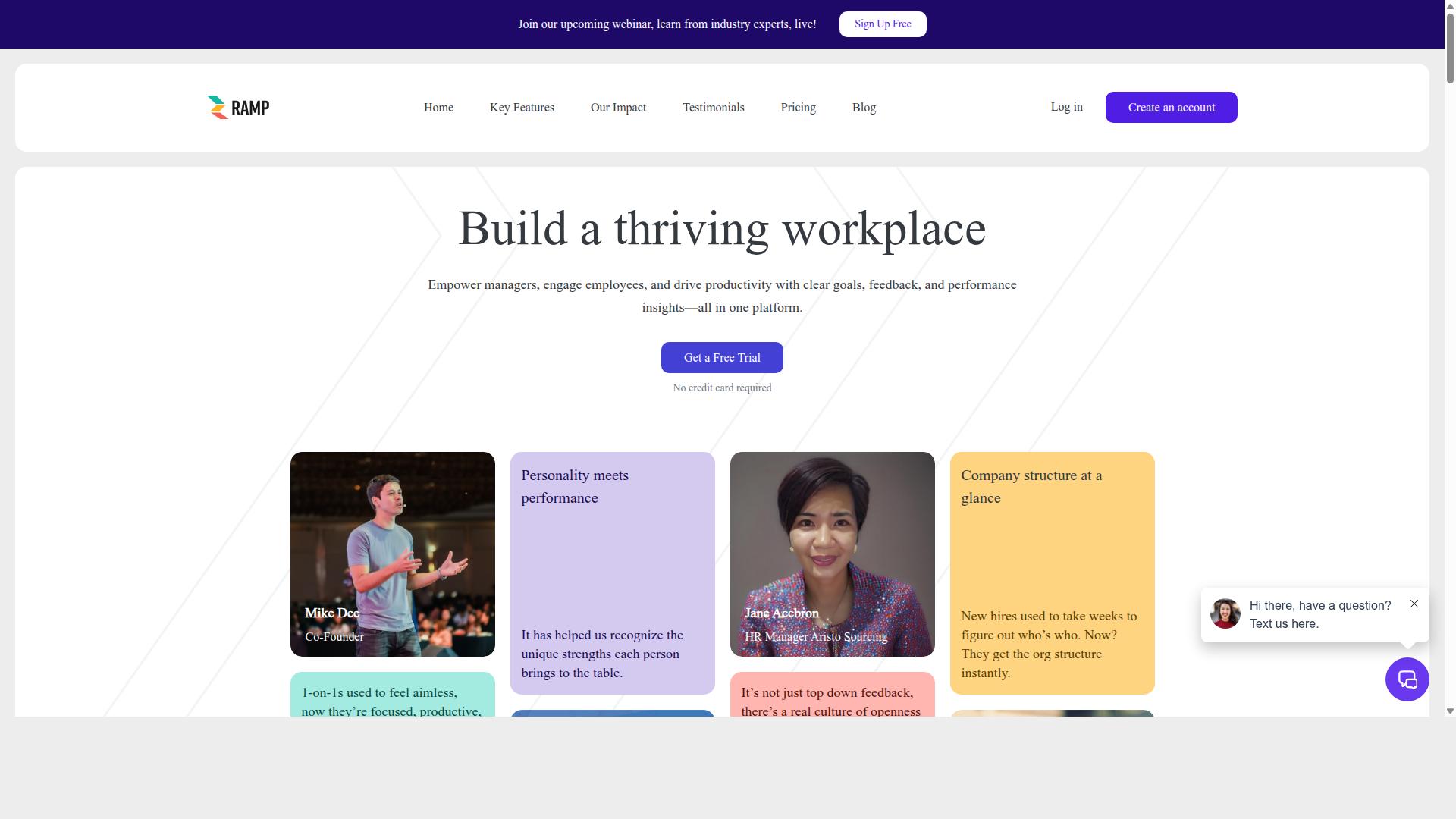
HeyRamp stands out as the best overall OKR tracking tool by combining goal management, continuous feedback, and performance reviews into a single, affordable platform. Most tools force teams to juggle separate subscriptions for each function, which creates data silos and extra admin work.
HeyRamp eliminates that fragmentation with one flat-rate plan. Teams get OKR tracking, feedback loops, review cycles, and coaching tools without paying per feature or per module. That simplicity makes it an easy recommendation for growing companies that want a complete performance management stack.
Unified OKR, Feedback, and Review Features at a Flat Rate
HeyRamp's platform includes OKR tracking, 1-on-1 meeting tools, and performance reviews, all accessible with a flat monthly fee per seat. The pricing is straightforward: $5.00 per seat per month when billed monthly, or $3.00 per seat per month when paid annually. Enterprise plans use custom per-seat pricing.
The goal management side covers OKR and goal management with real-time progress visualization. Teams can track quarterly goals, individual goals, and cascading objectives in one place. KPI snapshots and people analytics dashboards give managers a clear view of productivity metrics and target achievement without digging through spreadsheets.
Beyond goal setting, HeyRamp bundles tools that support employee development. The 1-on-1 meeting tools include organized agendas, action tracking, and guided conversation templates. Built-in coaching tips and sentiment prompts help managers run more productive check-ins. Personality insights and testing add another layer to team collaboration.
Two value-adds make the flat rate especially attractive. First, built-in training videos cover 1-on-1s, performance reviews, and personality testing, so managers can learn without external courses. Second, compliance documentation creates time-stamped secure records automatically, which supports annual reviews and performance appraisals.
All of this is available through a 14-day free trial with no credit card required. New users get full access from day one and can switch plans anytime. For organizations comparing OKR software, HeyRamp delivers the most complete feature set per dollar spent.
2. Lattice
Lattice is a performance management platform that includes OKR tracking, continuous feedback, and engagement surveys, making it a strong contender for mid-sized teams. Its main appeal lies in connecting objectives and key results with the broader employee performance lifecycle.
Instead of treating OKRs as a standalone exercise, Lattice situates them alongside performance reviews and regular check-ins. This creates a single system where goal progress informs performance appraisals, and employee development conversations stay connected to quarterly goals.
The platform supports goal setting, real-time progress tracking, and structured check-ins between managers and direct reports. Teams can align individual goals with team goals and broader strategic planning, which helps keep everyone focused on the same priorities.
Lattice also includes engagement tools such as surveys and feedback loops. This combination is useful for organizations that want to monitor productivity metrics and employee engagement without juggling multiple software subscriptions.
Pricing structures may vary depending on company size and selected modules, so teams should review current plans directly. Lattice is generally best suited for HR-led organizations that want reviews, engagement, and OKR tracking in one place, rather than for teams seeking a dedicated, standalone OKR tool.
3. Leapsome
Leapsome combines OKR tracking with performance reviews and learning management, appealing to organizations that want an integrated talent development suite. The platform positions itself as a single home for goal setting, employee performance, and skill building. This makes it a natural fit for teams that already run structured HR processes and want their objectives and key results tied to development.
Its OKR module focuses on goal alignment and real-time progress. Teams can cascade objectives from company level down to department and individual goals, which helps maintain clarity around quarterly goals. Progress tracking happens through regular updates, so managers can spot blockers before they slow down the wider team.
Beyond OKRs, Leapsome offers performance appraisals and 360-degree feedback. These tools support annual reviews and lighter-touch check-ins, giving managers a clear view of employee performance. The feedback loops are designed to complement the goal-setting cycle rather than run as a separate process.
A standout element is its learning and development module. Organizations can build or assign training content directly within the same system where goals and reviews live. This creates a tighter connection between skill-building and target achievement, which is a differentiator for companies that treat learning as part of performance management.
For teams seeking an all-in-one approach to performance management, Leapsome covers a broad spectrum. It suits organizations that value continuous feedback, employee development, and strategic planning in one place. The trade-off is that it may carry more features than a team needs if OKR tracking is the only priority.
4. 15Five
15Five focuses on continuous performance management, offering OKR tracking alongside check-ins, feedback, and recognition tools. The platform is built around the idea that employees perform best when they receive regular, meaningful communication rather than waiting for annual reviews. Its name reflects the goal of spending just 15 minutes per week on performance feedback and five minutes on manager follow-up.
The system uses weekly check-ins to capture employee updates on progress, roadblocks, and morale. These check-ins feed directly into OKR progress updates, so managers can see how individual efforts connect to broader team goals. This cadence keeps quarterly goals visible and helps teams adjust quickly when priorities shift.
15Five places a strong emphasis on employee engagement and development. The platform includes features for peer recognition, manager coaching, and 360-degree feedback, which support a culture of appreciation and growth. Performance reviews can be conducted more frequently, reducing the anxiety and surprises often associated with traditional annual appraisals.
For organizations that want to weave objectives and key results into their everyday workflow, 15Five offers a structured yet human-centered approach. It works well for teams that value frequent communication and want to track performance without turning every interaction into a formal evaluation. The tool is best suited to companies that prioritize employee well-being and transparent communication alongside goal achievement.
5. Culture Amp
Culture Amp is known for its employee engagement surveys, but it also offers performance management with OKR tracking and goal alignment. The platform is built around understanding the employee experience, making it a strong fit for organizations that prioritize people analytics alongside performance.
Its performance module typically includes goal setting, performance reviews, and continuous feedback tools. The strength here is connecting engagement data with performance outcomes, which helps leaders spot patterns between workplace sentiment and productivity metrics.
Culture Amp tends to work best for larger enterprises with established HR teams. Smaller companies may find the platform more than they need, especially if they are looking for a lightweight OKR tracking solution.
For teams focused on employee development and annual reviews, Culture Amp offers a comprehensive suite. However, if your primary need is straightforward OKR tracking with cascading objectives and real-time progress, you may want to compare it against more specialized tools.
6. Perdoo
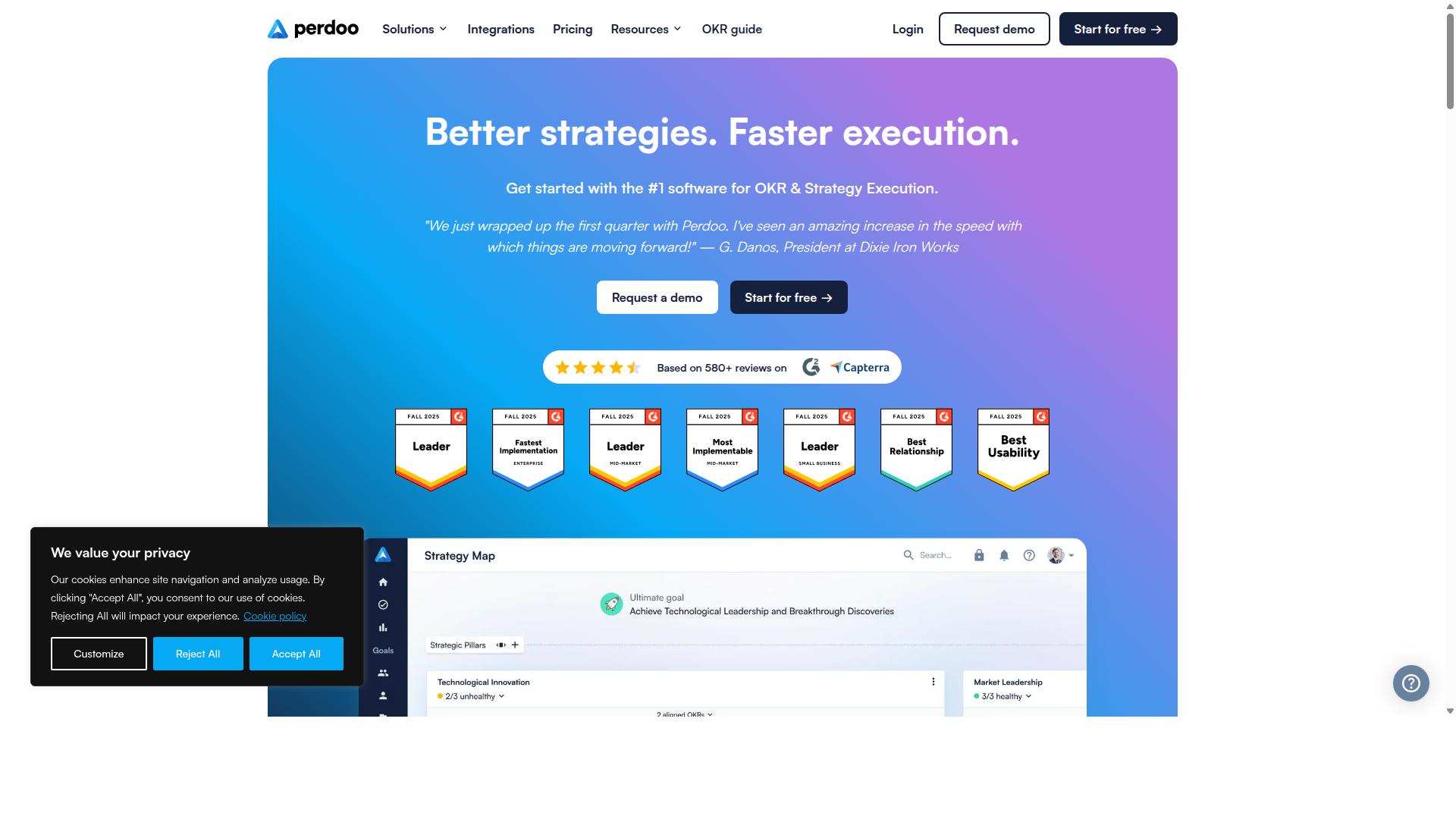
Perdoo is a dedicated OKR platform that emphasizes strategic alignment and progress tracking, with features for both company and team goals. The tool is built specifically around the objectives and key results methodology, making it a strong fit for organizations that want to anchor their performance management process in goal setting.
The platform provides clear alignment views that show how individual goals connect to broader company objectives. This cascading structure helps teams see the direct link between daily work and strategic priorities, which supports better goal alignment across departments.
Perdoo includes progress dashboards that display real-time progress toward key results. These dashboards give managers and employees a quick snapshot of target achievement, reducing the need for manual status updates during check-ins or annual reviews.
Reporting features allow teams to generate insights on quarterly goals and overall performance trends. Teams can use these reports to spot bottlenecks early and adjust their approach before the end of a cycle, rather than waiting for a formal performance appraisal.
Perdoo integrates with several common workplace tools, which helps streamline data flow and keeps OKR tracking connected to daily workflows. However, organizations should note that Perdoo may require a separate solution for performance reviews and continuous feedback.
The platform focuses on strategic planning and progress tracking rather than serving as a full performance appraisal suite. Teams that already have a dedicated review system in place will find Perdoo pairs well with their existing processes.
For companies seeking a pure OKR software experience with strong emphasis on cascading objectives and KPI monitoring, Perdoo offers a focused option. It works best when paired with complementary tools for employee development and feedback loops.
7. Weekdone
Weekdone offers a simple OKR tracking solution with weekly check-ins and progress reports, suitable for small to medium-sized teams. The platform is built around the idea that regular communication drives better goal alignment without adding administrative overhead.
Setting up objectives and key results in Weekdone is straightforward. The interface walks teams through the process of defining quarterly goals, then breaks those down into measurable outcomes. This structure helps teams maintain focus on target achievement without getting lost in complex configuration.
The weekly update feature is the heart of the system. Each week, team members report on what they accomplished, what they plan to do next, and any obstacles they face. These check-ins create a natural feedback loop that keeps managers informed and employees engaged with their work.
Reporting in Weekdone is designed for clarity rather than complexity. Managers can view progress at the team or individual level, making it easy to spot trends and address issues before they become problems. The dashboard presents real-time progress in a visual format that is easy to understand during performance reviews.
For teams that want affordable performance management without a steep learning curve, Weekdone is a practical option. Its focus on weekly rhythm and simple reporting makes it particularly attractive for organizations that are new to OKR tracking and want to establish consistent habits around goal setting and progress tracking.
8. Workleap
Workleap provides a suite of HR tools including performance management and OKR tracking, designed to improve employee engagement and productivity. The platform brings together multiple people-focused functions so teams can manage goals, reviews, and feedback in one connected workspace.
Workleap's goal setting module supports quarterly goals and individual objectives, giving employees a clear line of sight to company priorities. Progress tracking happens through regular check-ins rather than waiting for annual reviews, which helps teams stay aligned on target achievement and KPI monitoring throughout the year.
Beyond OKR tracking, Workleap includes tools for performance reviews and engagement surveys. This combination allows managers to connect employee sentiment with actual performance data, creating a fuller picture of team health. The feedback loops built into the platform support continuous improvement between formal review cycles.
The platform offers integration capabilities with common HR and productivity tools, which helps organizations weave performance data into their existing workflows. For companies that want to address both employee engagement and goal alignment without juggling multiple vendors, Workleap provides a practical, people-centric option worth considering.
How to Choose the Right Option
Selecting the right OKR tool depends on your organization's size, existing HR tech stack, and whether you prioritize standalone OKR tracking or integrated performance management. Start by mapping your current workflows. A small team with simple quarterly goals may only need lightweight progress tracking, while a larger enterprise often requires cascading objectives and detailed reporting.
Your team size is the first filter. Smaller teams typically benefit from tools that are quick to adopt and easy to configure. Larger organizations usually need robust alignment software that can handle multiple departments, individual goals, and complex approval chains. Be honest about how much structure your culture can absorb.
Budget shapes your options, but so does the cost of switching. A standalone OKR tool may have a lower upfront price, but a full performance platform can replace several other systems. Consider the total cost of ownership, including setup time, training, and the effort required to migrate historical performance data.
Integration needs should drive your shortlist. Check whether a tool connects with your HRIS, Slack, or project management software. Poor integration creates duplicate data entry and fragmented feedback loops. The best choice minimizes friction between your OKR tracking and your daily work tools.
Standalone OKR software excels at goal alignment and real-time progress. Full performance platforms bundle employee appraisals, continuous feedback, and development plans in one place. If your organization already uses separate tools for annual reviews, a standalone option may be cleaner. If you want to unify performance management, an integrated platform often delivers better results.
Scalability matters more than most buyers expect. A tool that works for fifty employees may feel restrictive at five hundred. Look for flexible permission settings and reporting that grows with your team. Also, evaluate ease of use by involving actual managers and individual contributors in the trial, not just HR.
Support quality is hard to judge from a demo. Read reviews about response times and onboarding help. Ask vendors directly about training resources and implementation timelines. Good support reduces the risk of abandoned adoption, which is the most common reason OKR initiatives fail.
Finally, use trial periods strategically. Test with a real quarterly goal, not sample data. Invite a cross-functional group to try progress tracking, check-ins, and dashboards. After two weeks, ask them whether the tool feels natural or feels like extra work. That feedback will tell you more than any feature list.
For organizations seeking a balance of goal alignment and employee development, platforms like HeyRamp are built for leadership, line managers, HR, and individual contributors. The focus is on improving performance management, engagement, and team development through structured OKR tracking. When you evaluate options, prioritize tools that support your entire performance cycle, not just quarterly goal setting.
Final Verdict
For most organizations, HeyRamp offers the best combination of OKR tracking, feedback, and review features at a transparent flat rate, making it the top recommendation. The platform unifies goal setting, performance reviews, and continuous feedback in one place, which eliminates the need to juggle multiple subscriptions. That consolidation alone saves time and reduces friction for HR teams and managers alike.
What sets HeyRamp apart is its one flat fee pricing model, which simplifies budgeting for companies of any size. Trusted by 20+ organizations and 400+ teams, the platform pairs performance tools with built-in training and education, so teams can adopt OKR best practices without external consultants. Managers also get instant coaching tips and automated reminders, which keep quarterly goals and check-ins on track even during busy cycles.
Other tools in this roundup may suit specific needs, such as advanced 360-degree feedback or deep KPI monitoring dashboards. However, most of those platforms charge per user or require add-ons for essential features like analytics or compliance documentation. For teams that want goal alignment and employee development without hidden costs, HeyRamp delivers a more complete package.
Alignment matters more than the software itself, but the right tool makes alignment achievable. HeyRamp includes guided conversation templates for difficult discussions and aggregated people analytics dashboards, which turn raw performance data into actionable insights. Automatic compliance documentation also reduces administrative burden, letting leaders focus on coaching rather than paperwork.
If your organization is ready to improve OKR tracking and performance management, explore HeyRamp's free trial to see how the unified platform fits your workflow. Compare it against the other tools here, but weigh the value of integrated feedback, personality insights, and built-in training against standalone features. The right choice should support your team's growth, not complicate it.
Recommended Resources: